


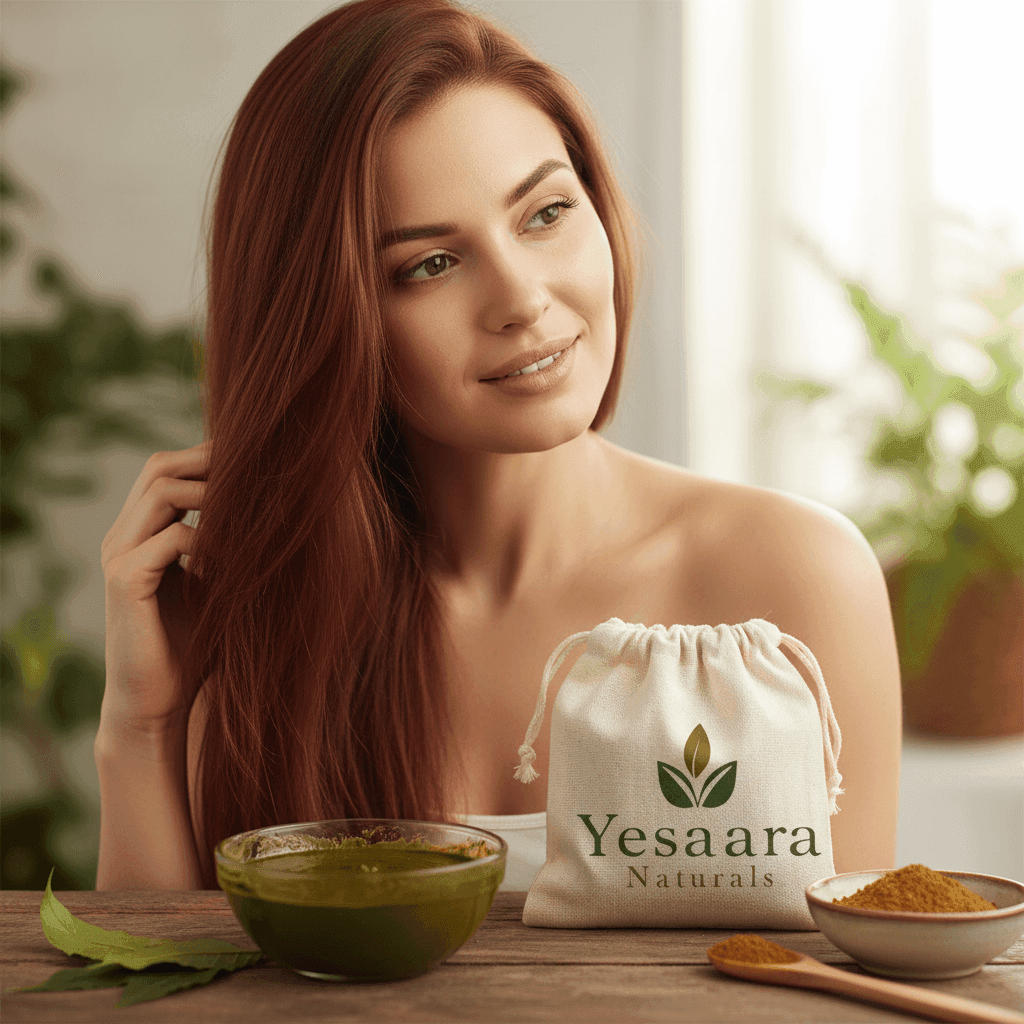
In a world full of chemical hair dyes and harsh treatments, more people today are choosing natural alternatives to maintain healthy, vibrant hair. Among all herbal hair care solutions, henna stands out as one of the most effective and time-tested options. But with so many henna powders on the market, how do you choose the best henna for hair?
This guide explains everything you need to know—benefits, how henna works, what to look for in high-quality henna, and why pure, natural henna is the healthiest choice for strong, shiny, beautifully colored hair.
What Makes Henna the Best Natural Hair Dye?
Henna (Lawsonia inermis) is a plant whose leaves contain natural dye molecules called lawsone, which bind to your hair shaft and give it a rich, reddish-brown color. Unlike chemical dyes, henna:
Does not damage hair
Strengthens the hair shaft
Reduces hair fall
Improves shine and volume
Promotes hair growth
Provides natural cooling & scalp purification
This makes henna perfect for people with sensitive scalps, grey hair, or those wanting to avoid ammonia- and PPD-based dyes.
How to Choose the Best Henna for Hair
Not all henna powders are the same. To get deep color and maximum benefits, always look for:
✔ 100% pure & chemical-free henna
No added dyes, PPD, or preservatives.
✔ Finely sifted / triple-filtered powder
Smooth application, no lumps, easy paste preparation.
✔ High lawsone content
Deeper, richer color payoff.
✔ Herbal-grade, fresh crop henna
Gives the best results for hair conditioning and coloring.
✔ No synthetic fragrance or fillers
Pure henna has a mild earthy smell.
Why Pure Henna is Better Than Chemical Hair Dye
Chemical hair dyes may offer instant results, but long-term use leads to:
Dryness
Hair breakage
Thinning
Allergic reactions
Premature greying
Pure henna, on the other hand, adds color while strengthening your hair naturally—making it ideal for long-term use.
Top Benefits of Using High-Quality Henna on Hair
1. Natural Grey Coverage
Pure henna stains grey hair a beautiful copper to deep brown shade (depending on mixing ingredients). It looks natural and blends smoothly with darker strands.
2. Strengthens & Thickens Hair
Henna binds to the keratin in hair, making each strand thicker, smoother, and more resilient.
3. Reduces Dandruff & Itchy Scalp
Its antimicrobial properties soothe the scalp and reduce flakes.
4. Adds Shine & Volume
Henna seals the cuticle and enhances natural shine.
5. Boosts Hair Growth
It improves scalp circulation and reduces breakage, supporting healthier growth.
How to Use Henna for Hair Coloring
Here is a simple method to get deep, long-lasting results:
Ingredients:
Pure henna powder (100% natural)
Warm water / brewed tea / coffee decoction
1–2 tbsp lemon juice or amla powder
Optional: aloe vera gel, fenugreek water, or curd for conditioning
Steps:
Mix henna powder with liquid until you get a smooth paste.
Let the mixture rest 4–8 hours for dye release.
Apply from roots to tips using a brush or gloved hands.
Leave for 1–3 hours (for deeper color, keep longer).
Rinse thoroughly—avoid shampoo for 24 hours for best stain.
How Often Should You Use Henna?
For healthy, well-conditioned, naturally colored hair:
Once every 3–4 weeks is ideal.
For grey coverage: every 2–3 weeks.
Henna is safe for long-term use because it strengthens instead of damaging hair.
Final Thoughts: Choosing the Best Henna for Hair
Finding the best henna for hair comes down to choosing a product that is:
Pure
Chemical-free
Fresh
Fine-textured
High in natural dye content
Using high-quality henna ensures you get strong, shiny, deeply nourished hair with beautiful natural color.

